US Court Strikes Down Trump’s F-1 Duration of Status Rule
A US federal court has struck down the Trump administration’s proposed rule to replace Duration of Status with fixed admission periods. The ruling preserves the existing framework, allowing eligible international students to remain in the US while maintaining their authorised academic status.
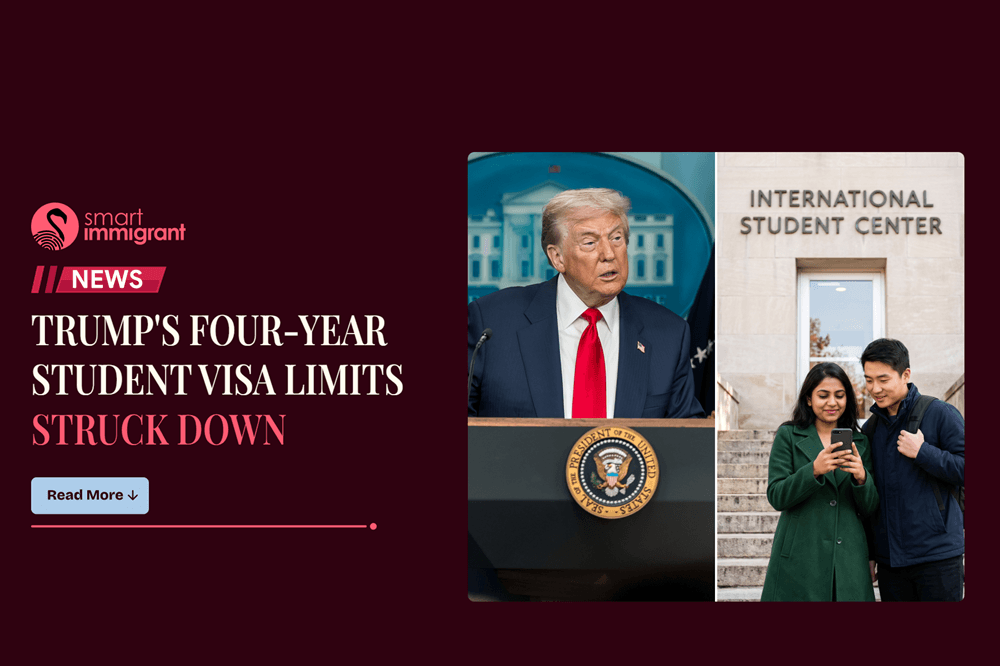
A US federal court has struck down the Trump administration’s rule replacing the Duration of Status framework with fixed admission periods for international students, exchange visitors and foreign journalists. The ruling preserves the existing framework that allows eligible students to remain in the US while maintaining their authorised academic status.
What Is F-1 Duration of Status?
Duration of Status (D/S) allows international students on F-1 visas to remain in the United States for as long as they maintain their authorised academic programme or approved practical training, along with the applicable departure period.
In July 2026, the Department of Homeland Security (DHS) introduced a final rule proposing to replace this system with a fixed admission period of up to four years. Students needing additional time would have had to apply for an extension of stay.
The rule also covered J-1 exchange visitors and I visa holders representing foreign media.
Why Did the US Court Strike Down the Rule?
On November 16, 2026, US District Judge F. Dennis Saylor IV granted the plaintiffs’ motion for summary judgment and vacated the entire DHS rule under the Administrative Procedure Act.
The court found the rule arbitrary and capricious and not in accordance with law. It also raised concerns about the restrictions the rule could place on academic mobility, including students changing programmes or pursuing additional qualifications.
How Does F-1 Status Affect Students?
The existing framework gives students flexibility to complete longer academic programmes, pursue further studies and participate in authorised practical training without a fixed four-year admission cap.
For Indian students exploring a US visa for Indians or the F1 student visa to green card pathway, the ruling preserves the existing student-status framework. It does not, however, create a direct route to US permanent residency or a United States green card.
Can F-1 Students Extend Their Stay?
Under the existing D/S framework, students maintaining valid F-1 status generally do not need to apply to USCIS for an extension simply because their studies exceed four years.
If additional time is needed to complete a programme, students should work with their designated school official to update their academic records and I-20 as required.
What Happens After F-1 Status Expires?
Students who successfully complete their programme generally receive a 60-day grace period to prepare for departure, transfer to another programme or take other permitted steps. Students who violate their status may face different consequences and should seek qualified immigration advice.
What Happens Next?
The ruling restores the previous D/S framework nationwide. However, the administration may appeal the final judgment and seek a stay. Unless the ruling is stayed or reversed, the proposed four-year limit and new extension requirements will not take effect.
International students should continue following official guidance from their universities and immigration authorities as the legal proceedings develop.
Stay connected with Smart Immigrant for more updates on US immigration and policy changes.