
US Supreme Court Limits Immigration Judges’ Power to Pause Deportation Cases
The US Supreme Court has declined to temporarily restore immigration judges’ authority to pause certain deportation proceedings, leaving a nationwide block on the practice in place. The October 27 decision keeps a legal dispute over how immigration courts handle removal cases unresolved, potentially affecting immigrants waiting for other legal decisions that could influence their cases.
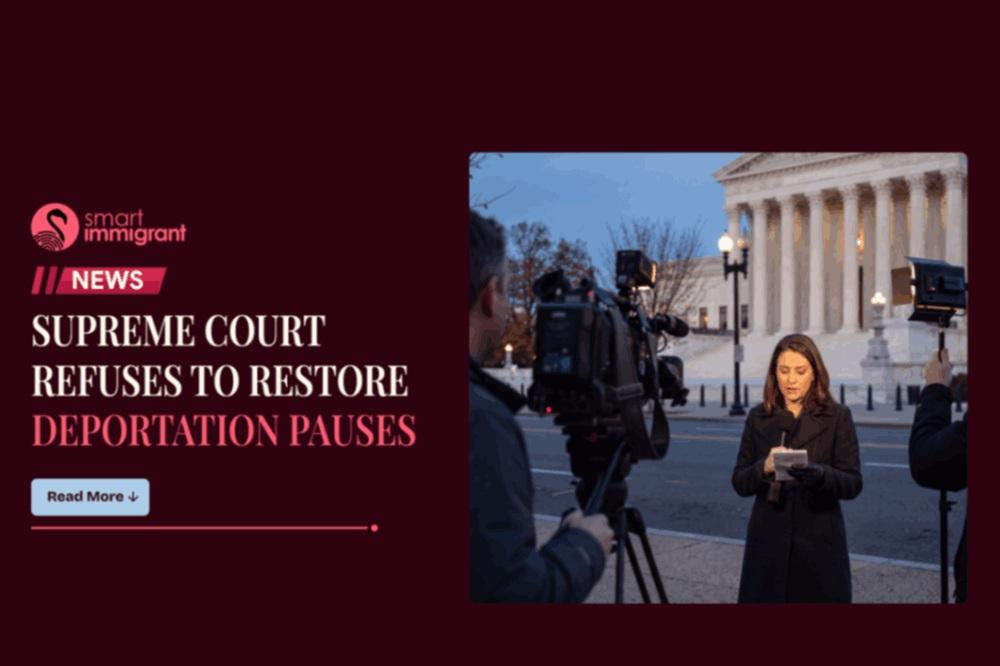
Supreme Court Refuses To Restore Deportation Pauses
The US Supreme Court has declined to temporarily restore immigration judges’ authority to pause certain deportation proceedings, leaving a nationwide block on the practice in place. The October 27 decision keeps a legal dispute over how immigration courts handle removal cases unresolved, potentially affecting immigrants waiting for other legal decisions that could influence their cases.
What Did the Supreme Court Decide?
The justices rejected an emergency request from Baltimore, New Haven, Columbus and immigrant legal services organisation Centro Legal de la Raza. The groups sought to suspend a lower court order that invalidated the federal regulation permitting administrative closure while their legal challenge continued.
The Supreme Court issued a brief, one-sentence order without explaining its reasoning. No justice publicly dissented. The decision does not resolve the underlying dispute, but the nationwide block remains in effect.
What Is Administrative Closure in Deportation Cases?
Administrative closure allowed immigration judges to temporarily remove certain cases from their active calendars without dismissing them. It was used when a separate legal process, such as a visa petition or criminal appeal, could affect the outcome of deportation proceedings.
In 2024, the Biden administration formally established the procedure through a federal regulation, arguing it helped manage court workloads and promote fair treatment. After President Donald Trump returned to office, his administration stopped defending the rule against a legal challenge brought by Texas.
Texas argued that administrative closure could allow immigrants without legal status to remain in the country indefinitely. The state and the federal government subsequently reached an agreement to invalidate the regulation, which a federal judge approved in June 2026.
Who Could Be Affected by the Ruling?
The continued block could affect immigrants whose deportation cases might previously have been paused while they pursued other legal options.
Key groups include:
- Immigrants with pending visa petitions: Their pending applications do not automatically stop removal proceedings.
- People pursuing humanitarian protections: Some individuals, including crime victims and neglected juveniles, may lose access to this procedural option.
- Immigration lawyers and support organisations: They may need to reassess how cases are managed under the current restrictions.
What Happens Next for Immigrants?
The broader legal challenge continues, but the Supreme Court's decision leaves the existing block in place for now. Immigrants facing removal should not assume that a pending visa or Green Card application will automatically delay deportation.
The ruling concerns immigration court procedures; it does not itself change the eligibility requirements for US visas or permanent residency. Anyone involved in removal proceedings should seek qualified immigration legal advice about their individual circumstances.
Stay connected with Smart Immigrant for more updates on US immigration and policy changes.