U.S. Citizenship Process in 2027: How Do Naturalization Interviews and Background Checks Work?
The U.S. citizenship process for 2027: how the naturalization interview, the 2025 civics test, and background checks work, and when citizenship can be denied.
U.S. Citizenship Process in 2027: How Do Naturalization Interviews and Background Checks Work?
In fiscal year 2024, about 818,500 people became US citizens (Congressional Research Service). If you are next in line, there is a catch worth knowing: the civics test changed in late 2025, so many of those new citizens studied a version you will not take. You have held your green card for years and filed Form N-400, and now one appointment stands between you and citizenship, the naturalization interview, the stage applicants worry about most. The U.S. citizenship process in 2027 runs through a background check, an interview, and English and civics tests. This guide covers what happens at each stage, what to bring, and when citizenship can still be denied.
What Is the U.S. Citizenship Process?
The U.S. citizenship process is naturalization: the route by which a lawful permanent resident becomes a citizen. You must already hold a United States green card, because US permanent residency is the prerequisite, and generally have five years of continuous residence (three if married to a US citizen) plus good moral character (INA 316).
If you are earlier in the journey, the first questions are usually how to get green card in USA, what the green card processing time looks like, or am I eligible for an employment-based green card. For Indian applicants researching America visa requirements for Indian citizens, the employment-based and family routes lead to the green card first, then to citizenship. This guide picks up at that step.
What Happens During the Naturalization Interview?
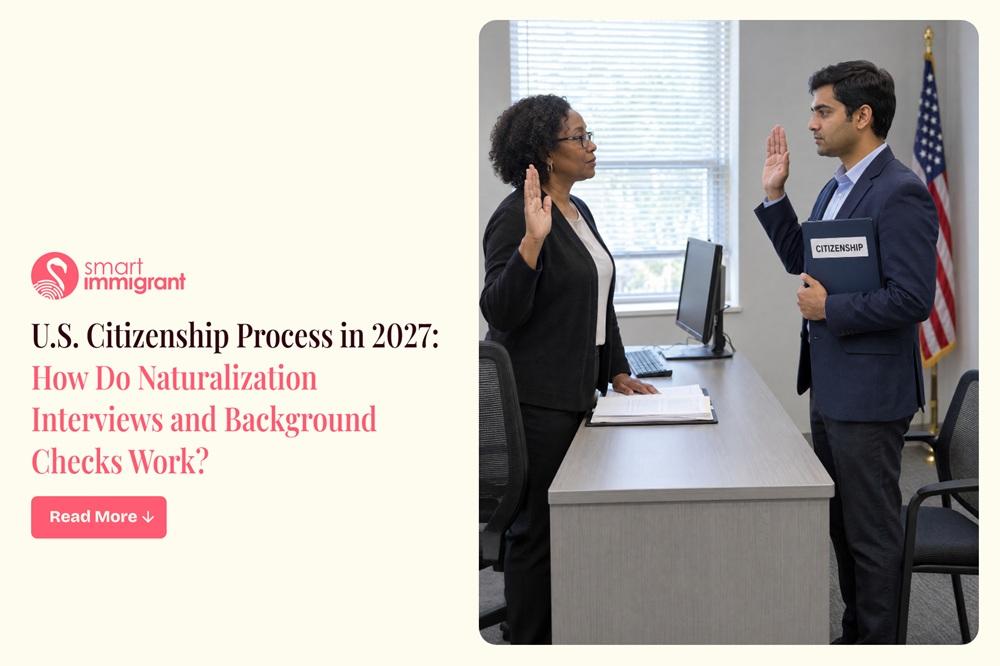
What happens during naturalization comes down to one appointment. A USCIS officer places you under oath and goes through your Form N-400, confirming your eligibility, travel history, and good moral character. The officer also assesses your spoken English, then asks you to read one sentence aloud and write one correctly.
Then comes the civics test, the part that changed and the one that most worries applicants.
For applications filed on or after October 20, 2025, USCIS uses the 2025 civics test, drawn from a bank of 128 questions. The officer asks up to 20 and you must answer 12 correctly, stopping once you pass or fail (Federal Register, 2025). Filings before that date use the 2008 test: 100 questions, 10 asked, 6 to pass. Applicants who are 65 or older and have lived in the United States as lawful permanent residents for at least 20 years study a specially designated 20-question list, are asked 10 questions at the interview, and need 6 correct answers to pass.
Civics test | Applies to filings | Question bank | Asked | Needed to pass |
2025 test | On or after Oct 20, 2025 | 128 | Up to 20 | 12 |
2008 test | Before Oct 20, 2025 | 100 | 10 | 6 |
So what questions are asked in interviews depends on your filing date.
How Long Are Citizenship Background Checks?
For most applicants they run quietly and add no separate wait, because USCIS starts them before the interview. After you file, USCIS collects your biometrics (fingerprints, photo, and signature) and runs an FBI fingerprint-based criminal history check plus name and interagency database checks (USCIS Policy Manual, Volume 12, Part B).
Most clear within the overall processing timeline, which the Congressional Research Service reported at a median of about 5.5 months in fiscal year 2025. A smaller number of name checks take longer and can delay scheduling.
Can Naturalization Be Denied?
Yes, in two ways. First, if you fail the English or civics test, USCIS gives you a second chance 60 to 90 days later and retests only the portion you failed; failing twice leads to denial, and you may reapply with a new Form N-400 (8 CFR 312.5). Second, you can pass both tests and still be denied if you do not meet an eligibility requirement, such as continuous residence, physical presence, or good moral character. Passing proves knowledge, not eligibility.
Common Mistake: treating the N-400 as a formality. It is reviewed under oath, so an inconsistency with your tax or travel records can raise a good moral character or residence question the test never touches.
Conclusion
The U.S. citizenship process ends at a single interview, but the outcome is built long before you walk in. Confirm which civics test applies to your filing date, keep your tax and travel records in order, and treat the N-400 as a sworn account of your eligibility. Prepared applicants clear it routinely.
If you are mapping your path from green card to citizenship, a structured profile assessment can help you confirm your timing and next steps.
Frequently Asked Questions
What questions does USCIS ask during the U.S. citizenship interview in 2026?
The officer asks about the information on your Form N-400, such as your residence, travel, employment, and good moral character, all under oath. You also take the civics test and an English reading and writing test. For applications filed on or after October 20, 2025, the civics questions come from the 128-question 2025 bank.
What happens during a naturalization interview for U.S. citizenship?
A USCIS officer verifies your identity, reviews your N-400 and eligibility, and administers the English and civics tests. If you pass and everything is in order, the officer may approve your application that day and schedule your Oath of Allegiance.
How long does the USCIS background check take before the citizenship interview?
Background checks run before your interview and are built into the overall processing time, which the CRS put at a median of about 5.5 months in fiscal year 2025. Most clear without a separate delay, though some FBI name checks take longer.
What documents should I bring to my U.S. citizenship interview?
Bring your interview appointment notice, green card, and a state-issued ID, plus all current and expired passports and travel documents from your statutory period. Add case-specific items such as tax records, and marriage or divorce certificates if you applied as a US citizen's spouse.
Can USCIS deny citizenship after passing the naturalization test?
Yes. Passing the English and civics tests does not guarantee approval. USCIS can still deny the application if you do not meet an eligibility requirement such as continuous residence, physical presence, or good moral character.
What happens if I fail the U.S. citizenship interview or English test?
If you fail the English or civics portion, USCIS schedules a second interview 60 to 90 days later and retests only the part you failed (8 CFR 312.5). If you fail again, the application is denied, but you may reapply with a new Form N-400.
Can I travel outside the United States while my citizenship application is pending?
Yes, but you must keep your permanent residence and be present for your biometrics, interview, and oath. Trips of six months or more can disrupt the continuous residence naturalization requires, so plan carefully and carry your green card and valid travel documents.
How long does it take to get U.S. citizenship after passing the naturalization interview?
Once approved, you become a citizen only after taking the Oath of Allegiance. Some applicants are sworn in the same day; others receive an oath notice (Form N-445) for a ceremony days or weeks later.