Trump Extends $100,000 H-1B Visa Fee for Another Year
The Trump administration has extended the $100,000 H-1B visa fee order for another year. Here’s what the extension means for H-1B workers and employers.
$100,000 H-1B Visa Fee Order Extended
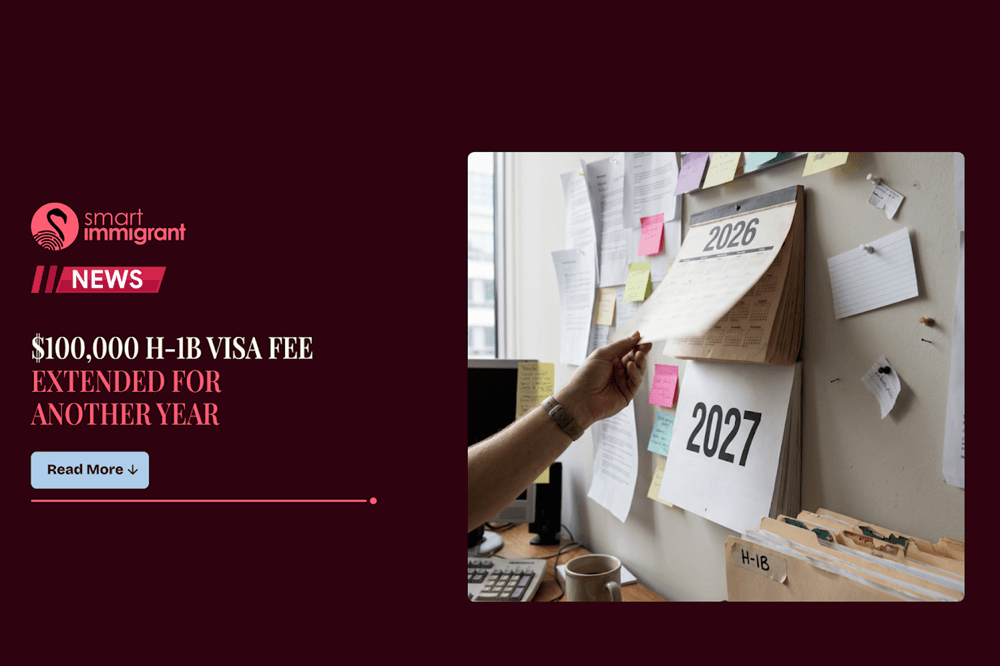
The Trump administration has extended an executive order that would impose a $100,000 fee on certain H-1B non-immigrant visas for another year. The original order, issued in September 2025, was due to expire this month. The extension comes as the fee continues to face legal challenges in US courts.
What Has Changed With the H-1B Visa Fee?
The administration has extended the existing executive order rather than changing the proposed fee amount. The order seeks to impose a $100,000 payment on certain H-1B visas, compared with the previous fee range of approximately $2,000 to $5,000.
The administration has also indicated that it wants to make the higher fee permanent. However, its implementation remains subject to ongoing court proceedings.
How Does the H-1B Fee Work?
The H-1B program allows US employers to hire skilled foreign workers, including professionals in technology and other specialised fields.
Under the executive order:
- The proposed fee is $100,000 for certain H-1B visas covered by the order.
- The original order was issued in September 2025.
- The order was scheduled to expire in September 2026.
- The extension keeps the order in place for another year.
- The order does not apply to foreign nationals already in the US on student visas who later receive H-1B visas.
- It also does not apply to renewals of existing H-1B visas.
Who Pays the H-1B Fee?
The H-1B program is employer-sponsored, with US companies using it to hire foreign professionals. The executive order concerns the payment associated with covered H-1B visas.
However, the $100,000 amount does not automatically apply to every H-1B worker or employer. Its application depends on whether the particular H-1B case falls within the scope of the executive order.
When Does the H-1B Fee Apply?
The extension is relevant to new H-1B cases covered by the order, but existing H-1B holders should distinguish the fee from matters such as h1b visa renewal and maintaining h1b visa status.
The order specifically excludes renewals of current H-1B visas and foreign students already in the United States who subsequently receive H-1B visas.
This means the extension does not automatically require every Indian professional currently working in the US on H-1B status to pay $100,000.
What Does This Mean for Indian H-1B Workers?
The development is particularly relevant to the US visa for Indians, as Indian professionals represent a significant share of H-1B workers, particularly in the technology sector.
For workers already in the US, the extension is separate from issues such as the h1b visa grace period, visa renewal and maintaining lawful status.
How Does This Affect H-1B vs Green Card Plans?
The extension comes as foreign professionals and employers continue to consider longer-term immigration pathways.
An H1B vs green card comparison involves two different immigration routes. H-1B provides temporary non-immigrant status, while an employment-based Green Card can provide a path to permanent residency.
Meanwhile, the $100,000 fee remains under legal challenge. A federal judge ruled in June that the higher fee imposed by the administration was illegal and blocked the government from collecting it. An appeals court is reviewing that decision, while another court is considering a separate challenge brought by the US Chamber of Commerce.
With the executive order now extended for another year, the future of the $100,000 H-1B visa fee remains tied to the ongoing legal proceedings. For employers and foreign professionals, the extension keeps the fee in focus while the courts consider the challenges surrounding its implementation.
Stay connected with Smart Immigrant for more updates on US immigration and policy changes.
Read Full News Here: