Supreme Court Upholds Birthright Citizenship: What Happens Next?
Indian-American leaders have welcomed the U.S. Supreme Court's decision to uphold birthright citizenship, calling it a landmark ruling that preserves a long-standing constitutional protection for children born in the United States.
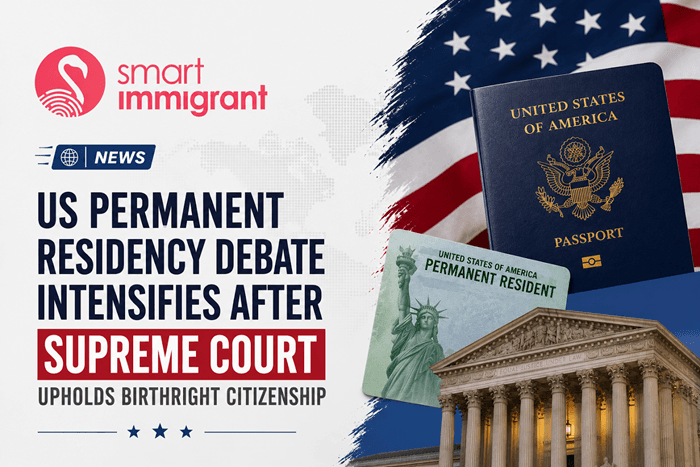
Indian-American organizations have welcomed the U.S. Supreme Court's decision preserving birthright citizenship, calling it a historic affirmation of the 14th Amendment and the Citizenship Clause. Community leaders say the ruling safeguards the constitutional right to citizenship for children born in the United States, despite ongoing legal challenges.
What Changed?
The U.S. Supreme Court has upheld the long-standing interpretation of the 14th Amendment's Citizenship Clause, ensuring that children born on U.S. soil continue to receive automatic U.S. citizenship.
The decision comes after legal challenges to the Trump administration's executive order seeking to limit birthright citizenship. While the Court's ruling primarily addressed the scope of nationwide injunctions issued by lower courts, it left constitutional protections for birthright citizenship in place as litigation over the executive order continues.
Indian-American advocacy groups described the judgment as a landmark moment, arguing that it preserves one of the country's most fundamental constitutional guarantees.
Why the Decision Matters
The principle of birthright citizenship has been protected under the 14th Amendment since 1868, providing that nearly all individuals born in the United States are citizens regardless of their parents' immigration status.
Community organizations said the ruling reinforces the constitutional right to citizenship and provides reassurance to immigrant families concerned about future policy changes. They also noted that the judgment preserves legal certainty while broader immigration debates continue across the country.
Impact on Immigrants
Although the ruling does not change eligibility for US permanent residency, United States Green Card holders and temporary visa holders closely followed the case because of its potential impact on future generations.
The decision does not affect US visa for Indians, How to get Green Card in USA, or Green Card processing time. However, immigration experts say preserving the Citizenship Clause provides greater stability for immigrant families planning their long-term future in the United States while pursuing employment-based, family-sponsored, or other lawful immigration pathways.
Indian-American organizations also emphasized that the ruling reaffirms constitutional protections that have shaped U.S. immigration and citizenship law for more than 150 years.
What Happens Next?
While the Supreme Court has preserved birthright citizenship for now, legal challenges surrounding the executive order are expected to continue in lower courts before any final determination on its legality.
For immigrant families, the ruling offers immediate certainty over citizenship rights while broader discussions on immigration reform and US permanent residency remain active across the United States.
For more updates on US permanent residency, visa policies, and immigration developments, visit Smart Immigrant and stay informed about the latest changes affecting immigrants in the United States.