
22 States Sue HUD Over Housing Aid Restrictions for Mixed-Status Families
A coalition of 22 states has sued HUD over a new rule that could eliminate federal housing assistance for mixed-status immigrant families. The policy could affect approximately 20,000 households nationwide, including eligible US citizens and children. The lawsuit challenges the rule's legality ahead of its scheduled December 14, 2026, implementation date.
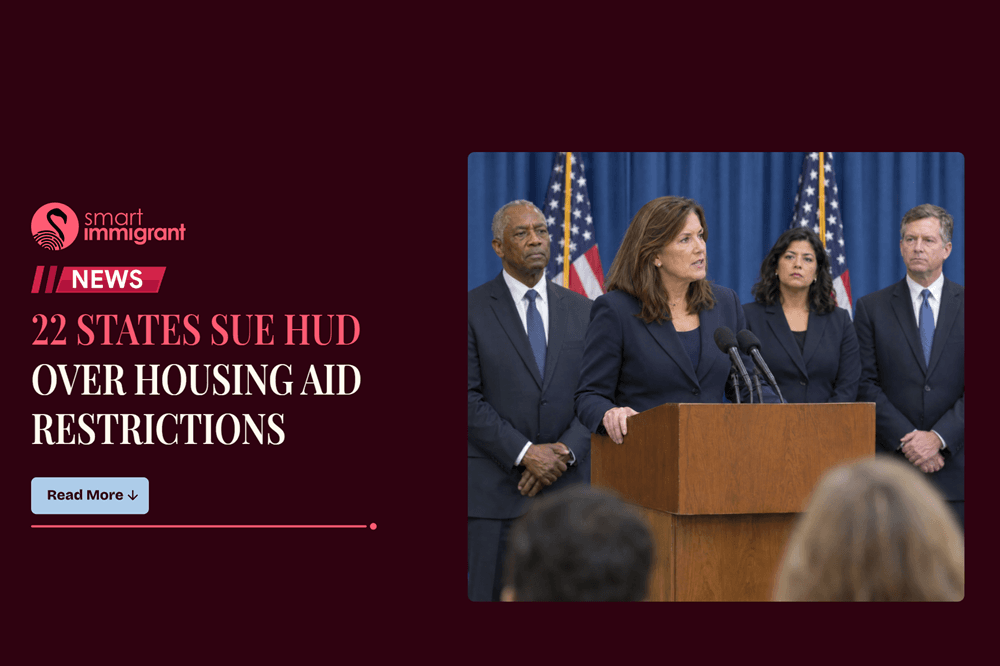
A coalition of 22 states has challenged a new US Department of Housing and Urban Development (HUD) rule that could eliminate federal housing assistance for mixed-status immigrant families. The lawsuit, filed on November 23, 2026, argues that the policy could force eligible US citizens and immigrants to lose housing support because another member of their household does not meet federal immigration requirements.
The rule, scheduled to take effect on December 14, 2026, could affect approximately 20,000 households nationwide, representing around 78,100 individuals.
What Is Mixed-Status Housing Aid?
Mixed-status housing aid refers to federal housing assistance provided to households containing members with different citizenship or immigration statuses. Under the existing framework, eligible family members can receive prorated housing assistance even if another household member does not qualify because of their immigration status.
The new HUD rule would change this arrangement by making assistance conditional on verifying the eligibility of every household member. Families with an ineligible member could lose federal housing support entirely.
Who Qualifies for Housing Assistance?
Federal housing assistance is available to eligible US citizens and certain noncitizens who meet the immigration requirements under Section 214 of the Housing and Community Development Act of 1980.
These benefits include public housing, Section 8 Housing Choice Vouchers and project-based rental assistance. Under the previous framework, eligible members of mixed-status households could receive assistance based on their individual eligibility.
HUD estimates that approximately 55,000 of the 78,100 individuals affected by the new rule are themselves eligible for federal housing assistance. Children account for approximately 65% of eligible household members in these families.
Can Immigrant Families Lose Housing?
Yes. Under the proposed enforcement framework, a household could lose its entire housing subsidy if even one member fails to establish eligible citizenship or immigration status. This could force families to leave assisted housing or separate household members to retain benefits.
The 22-state coalition argues that the policy reverses nearly three decades of federal practice and exceeds HUD's legal authority. The lawsuit seeks to block the rule before its implementation.
How Will HUD Rules Affect Families?
The changes could increase housing insecurity for mixed-status households, including families with US citizen children and eligible immigrant members. HUD, however, maintains that the rule strengthens eligibility verification and could redirect up to $218 million towards eligible Americans waiting for housing assistance.
For Indian nationals exploring a US visa for Indians, America visa requirements for Indian citizens, or pathways towards US permanent residency, it is important to understand that housing assistance eligibility is separate from immigration benefits. Whether someone is researching how to get a green card in USA or consulting an EB-1A best immigration consultant, the HUD rule does not change the eligibility requirements for a United States green card.
The lawsuit now places the implementation of the new housing restrictions under legal challenge, with December 14 approaching as the scheduled effective date.
Stay connected with Smart Immigrant for more updates on US immigration and policy changes.