Harvard Study Finds Skilled Immigration Lowers US Tech Workers’ Wages by Up to 16%
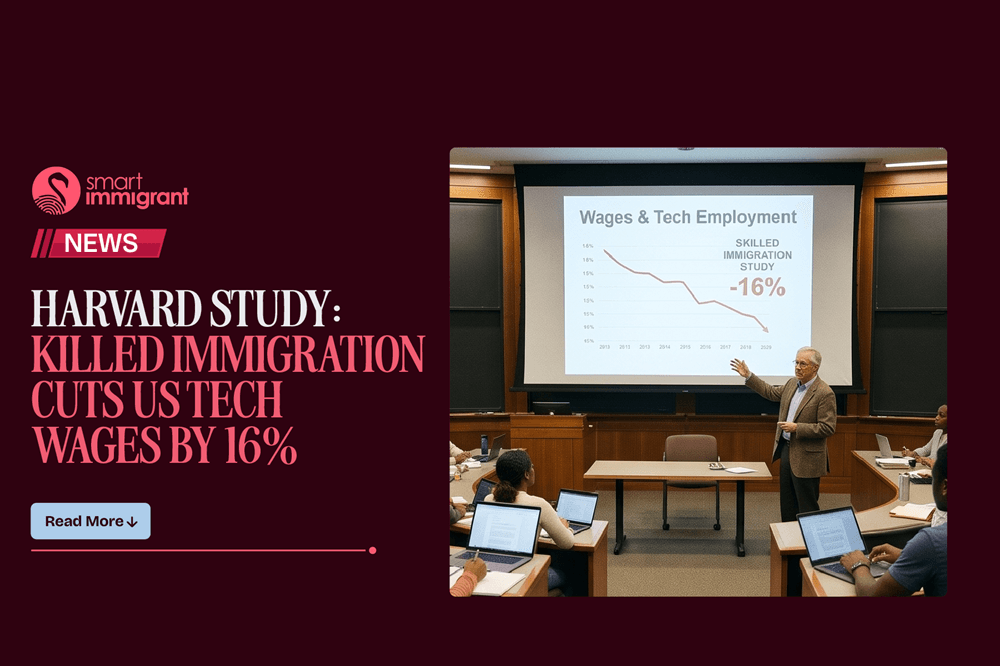
A Harvard study has found that skilled immigration may have reduced earnings for certain college-educated US workers, with the estimated impact reaching 16% in some technology-related fields. The findings add to the ongoing debate over foreign-worker hiring and the H-1B visa programme.
A Harvard study has found that skilled immigration may have reduced earnings for certain college-educated US workers, with the estimated impact reaching 16% in some technology-related fields. The findings add to the ongoing debate over foreign-worker hiring and the H-1B visa programme.
Does Skilled Immigration Lower Wages?
According to research by Harvard economist George Borjas, increased skilled immigration between 2012 and 2024 was associated with lower earnings among some US workers holding bachelor's and master's degrees.
The study estimates that average wages for these college-educated workers were approximately 1.3% lower than they would have been without temporary high-skilled immigration programmes.
The impact was more pronounced among workers with science and engineering degrees, whose estimated earnings were 3.5% lower. The largest impact was reported among master's degree holders in computing and electrical and computer engineering, where the estimated wage reduction reached 16%.
How Does Immigration Affect Tech Wages?
The study examines how the availability of foreign skilled workers influences competition in the US labour market.
Technology professionals with similar qualifications may compete for positions in the same occupational categories. According to the research, increased labour supply through temporary skilled immigration programmes can place downward pressure on wages in certain fields.
However, the study also identifies productivity gains associated with skilled immigration. These gains contributed an estimated 1.4% increase in wages, partially offsetting the downward pressure.
Do H-1B Workers Reduce Salaries?
The findings contribute to discussions about the H-1B programme, which allows US employers to hire foreign professionals in specialised occupations.
However, the study's estimates should not be interpreted as evidence that every H-1B worker reduces American salaries. The reported effects vary across educational qualifications and professional fields.
For Indian professionals exploring a US visa for Indians, the findings also bring attention to the wider economic debate surrounding skilled-worker immigration. They do not change America visa requirements for Indian citizens, the H1B visa grace period or existing immigration eligibility rules.
What Is Skilled Worker Immigration?
Skilled worker immigration allows employers to recruit foreign professionals with specialised qualifications and expertise. In the US, the H-1B programme is one such pathway, while employment-based Green Cards provide routes towards US permanent residency.
The distinction between H1B vs green card is important: one generally provides temporary employment authorisation, while the other offers permanent resident status.
The Harvard findings add another dimension to the debate over skilled immigration, highlighting the need to consider both labour-market competition and productivity gains when evaluating foreign-worker policies.
Stay connected with Smart Immigrant for more updates on US immigration and policy changes.