How to Prepare Before the H-1B Visa Grace Period Ends
A practical guide to the H-1B Visa Grace Period: what the 60 days really cover, your options after a layoff, and how EB-1A and EB-2 NIW let you self-petition a green card.
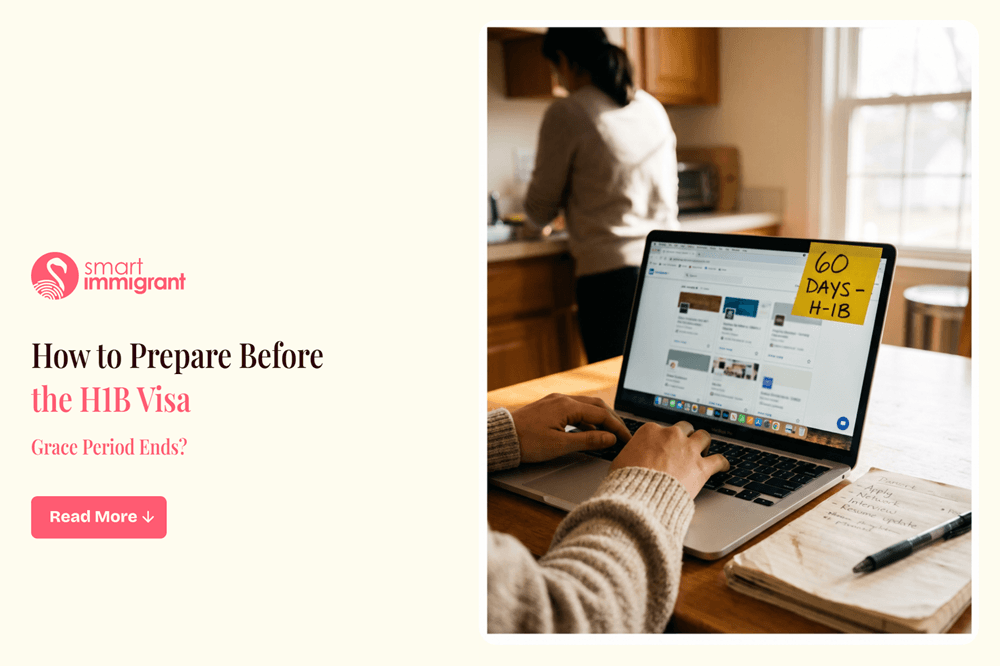
Losing an H-1B job starts a clock most people do not fully understand. The H-1B Visa Grace Period gives you up to 60 days to act, but it is shorter and stricter than it sounds, and running it out without a plan can end years of work in the US. Preparation, not panic, protects you.
The reassuring part is that you have more control than the timeline suggests. Beyond finding a new employer, skilled professionals can often self-petition a green card and keep their future in their own hands. This guide explains what the grace period covers, your options, and how to use the 60 days.
What Is the H-1B Visa Grace Period?
After certain H-1B employment ends, you get a one-time grace period of up to 60 days, or until your I-94 expires, whichever is shorter, to find a new employer or change status.
The h1b visa grace period is a federal rule giving H-1B and other specialty-occupation workers up to 60 consecutive days after a qualifying job loss to stay in valid H1B visa status without a job (USCIS, 8 CFR 214.1(l)(2)).
Two limits catch people off guard: it is capped by your I-94 expiration, so if only 30 days remain on your status you get 30, not 60, and it is generally available once per authorized validity period.
What Happens After the H-1B Grace Period?
If you have not filed something to preserve status by day 60, you fall out of status and are expected to depart, which can affect future filings.
What happens after the H-1B grace period is simple and serious: without a new H-1B petition, a change of status, or another filing on record, your authorized stay ends, and overstaying can trigger unlawful-presence consequences that complicate future filings.
Common Mistake: Treating day 60 as a soft deadline. It is not; the safest plans put a filing on record well before the clock runs out. |
What Are Your Options Before the Clock Runs Out?
Find a new H-1B employer, change to another status, or file a self-petitioned green card, often more than one at once.
You generally have three routes:
- A new H-1B employer files a petition, which can extend your stay and, under portability rules, sometimes let you begin work on filing.
- A change of status to a dependent, student, or visitor status, if you qualify.
- A self-petitioned green card through EB-1A or EB-2 NIW, which needs no employer.
Smart Immigrant Insight: Above routes not mutually exclusive. Many professionals run a job search while preparing a self-petition, so their future does not hinge on any single employer saying yes. |
Can H-1B Workers Self-Petition for a Green Card?
Yes. If you qualify for EB-1A or EB-2 NIW, you can file Form I-140 yourself, with no employer, no job offer, and no labor certification.
This is the option most H-1B workers discover too late. In the h1b vs green card decision, two categories let you self petition green card USA style, on your own record.
- EB-1A is for extraordinary ability, proven by a major award or three of ten criteria.
- EB-2 NIW waives the job offer when your work serves the national interest, under the Dhanasar test.
The EB-1A vs EB-2 NIW choice comes down to your record: EB-1A demands top-of-field acclaim but often moves faster for Indian applicants, while NIW has a more accessible standard.
Which Green Card Options Are Available After H-1B?
Employer-sponsored EB-2 or EB-3 through a new job, or self-petitioned EB-1A or EB-2 NIW that you control yourself.
Here is which green card options are available after H-1B, side by side:
Path | Employer needed | Best for |
EB-2 / EB-3 (sponsored) | Yes | Those with a new sponsoring employer |
EB-1A (self-petition) | No | Proven, top-of-field achievers |
EB-2 NIW (self-petition) | No | Work of national importance |
The self-petition routes matter most: they do not depend on landing a sponsor inside 60 days.
What Should You Do Right Now?
Confirm your exact deadline, file something before day 60, and if your record is strong, start a self-petition immediately.
A calm, sequenced plan beats a scramble:
- Find your real deadline on your I-94, not just the 60-day figure.
- File before the clock runs out. A new petition, a change of status, or a self-petition on record protects you.
- Assess self-petition eligibility now and keep documents ready, so nothing avoidable delays a filing.
Conclusion
The H-1B Visa Grace Period is a window, not a warning to freeze. Sixty days, capped by your I-94, is enough time to act if you know your deadline and file before it. A new employer is one answer, but a self-petitioned EB-1A or EB-2 NIW hands control back to you.
If you are unsure how this applies to you, a professional profile evaluation with Smart Immigrant can help identify the strongest immigration pathway for your goals.
Frequently Asked Questions
What happens if my 60-day H-1B grace period expires before I find a new job?
If nothing is filed to preserve your status by day 60, your authorized stay ends and you are expected to depart. Overstaying can create unlawful presence and complicate future filings, which is why acting before the deadline matters.
Can I file an EB-1A petition after my H-1B grace period ends?
You can file an I-140 at any time, but filing after your status has lapsed does not restore status by itself and weakens your position. It is far better to file the EB-1A while you are still in valid h1b visa status.
Can I self-petition for a green card while on H-1B status?
Yes. H-1B workers who qualify for EB-1A or EB-2 NIW can self-petition by filing Form I-140 themselves, with no employer or job offer. Knowing your eligibility before any job loss is a real advantage.
What are my options if I lose my H-1B job and cannot find a new employer within 60 days?
Your main options are a change of status if you qualify, or a self-petitioned green card through EB-1A or EB-2 NIW. Because self-petition paths need no employer, they can be a lifeline when the 60-day search is not going well.
Can an EB-2 NIW or EB-1A petition help me stay in the U.S. after losing my H-1B job?
These are green card filings, not status grants, so an I-140 alone does not extend your stay. But filing while in status, often paired with a change-of-status request, is part of how many protect their future after a layoff.
Can I change my status from H-1B to another visa before the 60-day grace period ends?
Yes, if you qualify for another category such as dependent, student, or visitor status. The request must generally be filed before your grace period ends, so start early.
Can I stay in the U.S. while my self-petitioned I-140 is pending?
An I-140 by itself does not grant status. To remain lawfully, you generally need a separate valid status or a timely change-of-status or adjustment filing, so sequencing matters.
How can I protect my immigration status if my H-1B grace period is about to expire?
Confirm your exact deadline from your I-94, file something on record before day 60, and assess your self-petition eligibility immediately. If your profile is strong, an EB-1A or EB-2 NIW filing can turn a deadline into a longer-term plan.