
Real people. Real cases. Real answers in an Immigration Community from people who've done it. Explore More

All press
Immigration UpdatesOctober 2, 2026

H.R. 1 Immigration Fees to Increase From October 16, 2026

USCIS will increase certain H.R. 1 immigration fees from October 16, 2026, affecting asylum, parole, TPS and certain EAD applications.
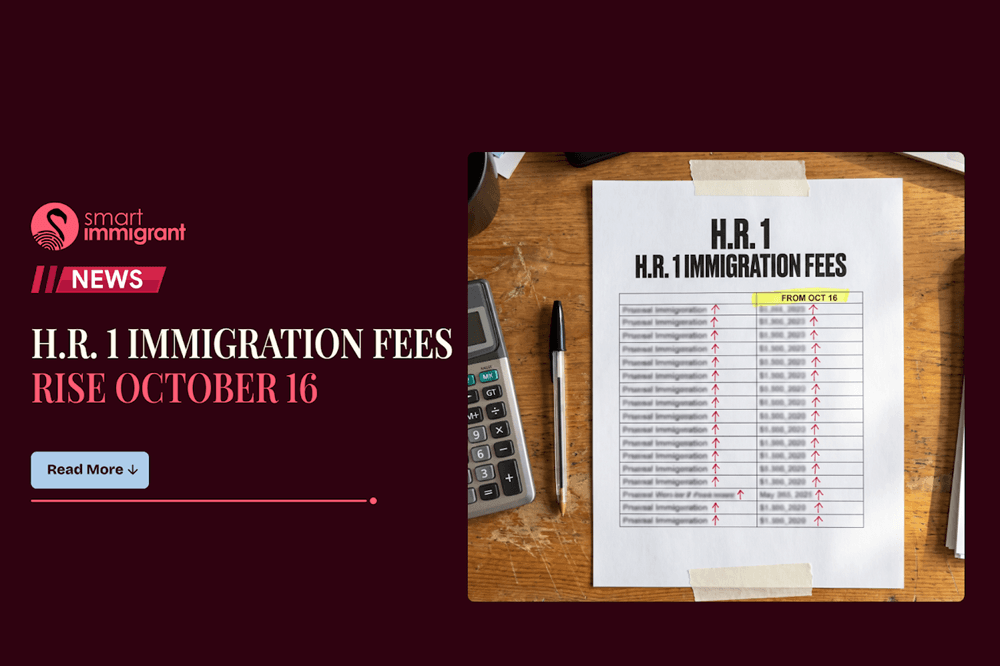
H.R. 1 Immigration Fees document next to a calculator
A person calculating filing costs alongside USCIS immigration forms, illustrating the upcoming FY 2027 inflation-adjusted fee changes.

H.R. 1 Immigration Fees to Rise in FY 2027

USCIS has announced FY 2027 inflation adjustments to certain immigration fees created under H.R. 1, the “One Big Beautiful Bill Act.” The revised fees will take effect for filings postmarked on or after October 16, 2026.

What Are the New H.R. 1 Immigration Fees?

The increases range from $3 to $30, depending on the filing. The revised amounts include:

  • Annual Asylum Fee: $102 → $105
  • Immigration Parole Fee: $1,020 → $1,050
  • Initial EAD for asylum applicants: $560 → $570
  • Initial parole or TPS EAD: $560 → $570
  • TPS application: $510 → $520 

Several other H.R. 1 fees will remain unchanged, including the $100 initial asylum fee, $250 Special Immigrant Juvenile fee and $24 I-94 fee.

When Will H.R. 1 Immigration Fees Increase?

The new fees apply to requests postmarked on or after October 16, 2026. USCIS states that filings submitted with outdated fees after the effective date can be rejected. 

The annual adjustments are required under H.R. 1 and are based on inflation, using the Consumer Price Index for All Urban Consumers (CPI-U). 

Who Will Be Affected by the H.R. 1 Fee Increase?

The changes primarily affect applicants and beneficiaries in asylum, parole and Temporary Protected Status (TPS) categories, along with certain Employment Authorization Document (EAD) filings. They do not change regular USCIS fees for employment-based petitions or H-4/AOS EADs.

For applicants planning their US permanent residency or other immigration filings, these specific increases may not apply to their case. However, checking the correct fee before filing remains important because USCIS can reject a submission with an incorrect payment.

For the latest USCIS fee information, check the official USCIS Fee Schedule. 

Stay connected with Smart Immigrant for more updates on US immigration, visa rules and United States Green Card developments.

Read Full News Here:

https://www.rnlawgroup.com/uscis-announces-fy-2027-inflation-adjustments-to-h-r-1-immigration-fees

More press

More coverage, announcements, and mentions of Smart Immigrant.

US Deportation Policy Faces Congressional Scrutiny in 2027
US Deportation Policy

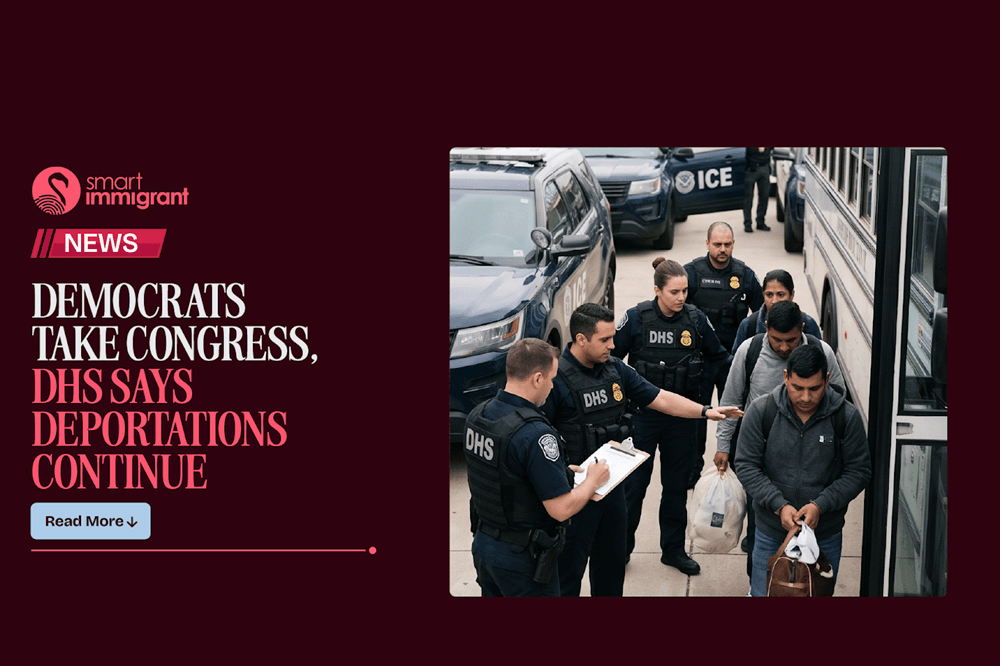
US Deportations to Continue Despite Democrats Taking Control of Congress, DHS Says

US deportation policy faces renewed congressional scrutiny after Democrats secured control of both chambers in the November 2026 midterm elections. DHS Secretary Markwayne Mullin says deportations will continue, while Democrats prepare to examine ICE operations, enforcement funding, and federal immigration practices.

November 6, 2026
Indian Student Decline in US SEVIS records and visa trends
Indian Students in US

US Sees 13.5% Drop in Indian Students as Active Records Fall by Nearly 50,000

The number of active Indian student records in the United States has declined by 13.5% in one year, falling to 316,893 in October 2026 from 366,258 in October 2025. The decline comes amid tighter student visa scrutiny, processing delays and uncertainty surrounding post-study employment opportunities. Despite the fall, India remains the largest source country for international students in the US, according to data from the Department of Homeland Security's Student and Exchange Visitor Information System (SEVIS).

November 5, 2026
US Midterm Election Results and their impact on H-1B visas
US Midterm Election Results

US Midterm Election Results: What They Could Mean for H-1B Visas and Indian Workers

The 2026 US midterm elections have reshaped the balance of power in Congress, potentially influencing the direction of immigration policy during President Donald Trump's remaining term. With Democrats projected to gain control of both the Senate and House of Representatives, the results could affect debates surrounding H-1B visa restrictions, employment-based Green Cards and immigration enforcement. However, the election outcome does not automatically change existing immigration rules.

November 4, 2026