US Immigration Challenges Drive Talent Shift as 65% of Employers Report Losing Foreign Workers
A new report shows 65% of U.S. employers lost skilled foreign workers due to visa delays, impacting H1B visa status, Green card processing time, and employment-based immigration strategies.
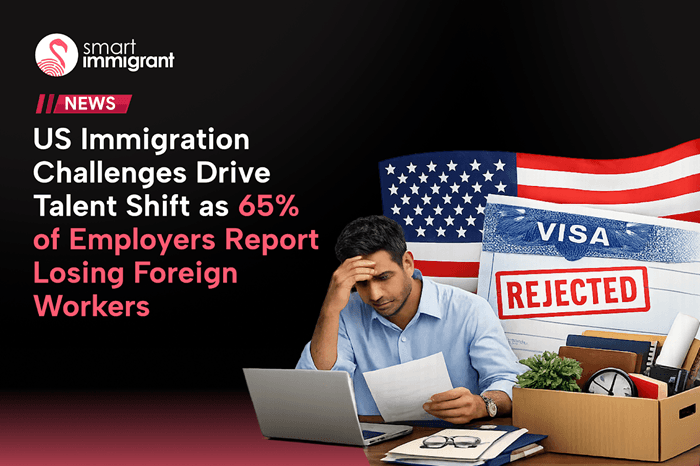
Nearly 65% of U.S. employers lost at least one foreign employee due to immigration-related issues over the past year, according to Envoy Global's 2026 Corporate Immigration Trends Report. The findings highlight how ongoing US immigration challenges are reshaping hiring strategies and global talent movement.
What Changed?
The report shows a sharp rise in workforce disruption, with 65% of employers reporting the loss of foreign workers due to visa-related issues, up from 53% in 2025.
Companies that rely heavily on the H-1B visa program are particularly affected, with 76% reporting employee losses. Employers cited visa processing delays, policy uncertainty, and increased scrutiny as key reasons skilled workers are leaving the United States or choosing opportunities elsewhere.
Why It Matters?
Ongoing US immigration challenges are forcing companies to rethink talent strategies. To reduce disruptions, 68% of employers expect to rely on nearshoring or offshoring in 2026, shifting work or employees to countries with more predictable immigration systems.
Many organizations are also accelerating United States Green Card sponsorships, filing petitions earlier, and exploring alternative visa pathways. Some companies are relocating employees to countries such as Canada and the United Kingdom while awaiting U.S. approvals.
Nicole Hartnett, Managing Attorney at Corporate Immigration Partners, noted that the most significant shifts are occurring in the technology, financial services, and professional services sectors.
Impact on Immigrants
The findings highlight growing challenges for foreign professionals navigating the U.S. immigration system, especially those dependent on employer-sponsored visas.
Employers are strengthening employment-based immigration strategies and prioritizing long-term retention through Green Card sponsorship. For many workers, securing US permanent residency is becoming increasingly important amid ongoing uncertainty.
While the report does not change How to get Green Card in USA or Green Card processing time, it underscores how immigration planning is now a critical factor in career decisions.
As global competition for talent intensifies, U.S. employers are treating immigration strategy as a core business priority rather than a compliance requirement, raising concerns about the country’s ability to attract and retain skilled international professionals.
For more updates on US visa for Indians, United States Green Card, student visas, and the latest U.S. immigration developments, visit Smart Immigrant and stay informed about the policies affecting immigrants and international students.