US Student Visa Rule Faces Pushback Over Proposed Four-Year Stay Cap
The US Student Visa Rule faces opposition as FIIDS urges a halt to the proposed four-year stay cap for F-1 and J-1 students. Learn what it means for international students.
Thanks for sharing the original article. You're right—I had the organization name wrong and also mixed this up with another report about the proposed rule. This story is not about the proposal itself; it's about FIIDS urging Congress and USCIS to halt its implementation. The article should therefore focus on the advocacy group's response, while providing readers with enough context about the underlying rule.
Here's a revised version in your preferred 350–400 word, Reuters-style format.
US Student Visa Rule Faces Pushback Over Proposed Four-Year Stay Cap
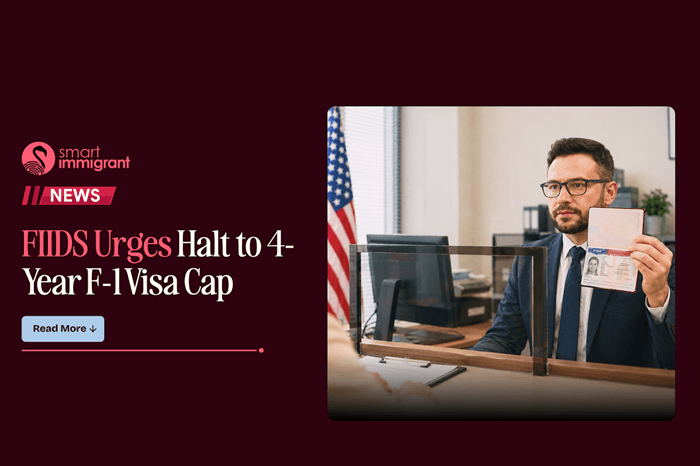
The Foundation for India and Indian Diaspora Studies (FIIDS) has urged the U.S. Congress and the U.S. Citizenship and Immigration Services (USCIS) to halt the implementation of the new US Student Visa Rule, arguing that the proposed four-year cap on F-1 and J-1 visa stays could disrupt higher education, research, and the country's long-term competitiveness.
FIIDS Calls for Delay Before September Implementation
The appeal comes after the U.S. announced changes to the Duration of Status (D/S) policy, replacing the long-standing system with a fixed period of authorized stay for international students, exchange visitors, and journalists. The new rule is scheduled to take effect in mid-September 2026.
According to FIIDS, the proposed four-year limit does not reflect the time many academic programmes actually require. Citing education data, the organization said the median completion time for a bachelor's degree is about 52 months, while doctoral programmes take an average of 5.7 years, raising concerns that students could be forced to seek extensions before completing their studies or research.
Group Warns of Impact on Universities and Innovation
FIIDS said the policy could have broader economic consequences for the United States. The organization noted that new international student enrolments declined 17% in Fall 2025, marking the sharpest drop since the pandemic, with 96% of higher education institutions attributing the decline to visa-related concerns.
The group also highlighted that nearly 1.2 million international students currently contribute an estimated USD 55 billion annually to the U.S. economy. Citing estimates from the National Association of Foreign Student Affairs (NAFSA), FIIDS said the recent decline in enrolment alone could result in more than USD 1.1 billion in lost revenue and nearly 23,000 fewer jobs.
What FIIDS Wants the Government to Do
FIIDS has urged Congress to restore the Duration of Status (D/S) framework for F-1 student visa and J-1 holders or provide exemptions for longer graduate STEM programmes. It has also asked USCIS to exclude OPT and STEM OPT periods from the four-year limit and issue administrative relief before the rule takes effect.
With the implementation date approaching, international students planning their academic journey, F1 to H1B visa transition, or eventual F1 student visa to Green Card pathway should closely monitor further announcements from USCIS.
Stay connected with Smart Immigrant for the latest U.S. immigration news and expert insights on student visa policies.