US Student Visa Rules Change Sept. 15 What F-1 & J-1 Students Know
New US Student Visa Rules take effect on September 15, ending the Duration of Status (D/S) policy for F-1 and J-1 visa holders. Check who is affected and what changes.
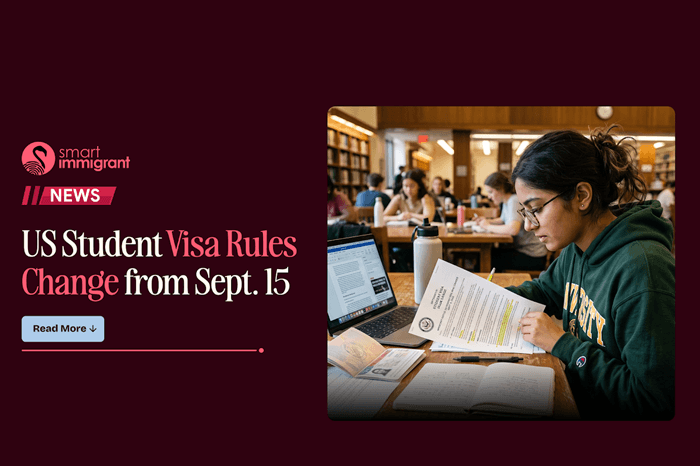
The United States will implement new US Student Visa Rules from September 15, 2026, replacing the long-standing Duration of Status (D/S) system with fixed admission periods for F-1 student visa holders and J-1 exchange visitors. The changes introduce a maximum four-year stay, shorter post-study timelines, and greater federal oversight of international students.
Duration of Status System to End
Under the new rules, international students will no longer be allowed to stay in the U.S. for the duration of their academic programme under the Duration of Status (D/S) framework. Instead, F-1 student visa holders and J-1 exchange visitors will receive admission for the length of their programme, subject to a maximum stay of four years. Students who need additional time must apply to U.S. Citizenship and Immigration Services (USCIS) for an Extension of Stay before their authorised period expires.
The policy will also apply to students already studying in the United States, who will automatically transition to the new admission system once the rule takes effect.
Grace Period Reduced, Oversight Increased
The revised framework reduces the post-study grace period from 60 days to 30 days, requiring students to leave the U.S., transfer institutions, change immigration status, or begin Optional Practical Training (OPT) within the shorter timeframe.
The rules also introduce stricter oversight for programme extensions, changes of major, and pursuing another degree. According to the Department of Homeland Security (DHS), the measures are intended to strengthen security, improve monitoring, and prevent misuse of student visas.
Indian Students Could Feel the Biggest Impact
The changes are expected to have a significant impact on Indian students, who now form the largest international student community in the United States. More than 360,000 Indian students were enrolled in U.S. universities during the 2024–25 academic year, with many pursuing master's, doctoral, and STEM programmes that often extend beyond four years.
Several universities, including Columbia University, have advised international students currently outside the U.S. to return before September 15 to avoid complications during the transition. Meanwhile, education groups such as NAFSA and the Foundation for India and Indian Diaspora Studies (FIIDS) have warned that additional government approvals could create uncertainty for longer academic programmes, delay research, and reduce the country's appeal as a destination for global talent.
Students planning to study in the U.S. should closely monitor the new US Student Visa Rules, understand the updated America visa requirements for Indian citizens, and stay informed about F1 visa processing time and future pathways from an F1 student visa to Green Card. As the September 15 implementation date approaches, further guidance from U.S. immigration authorities will be crucial for prospective and current international students.
Stay connected with Smart Immigrant for the latest U.S. immigration news and expert insights on student visa policies.